DCMA is the shield, where is my sword?
The “Takedown” Myth
Every creator knows about the DMCA (Digital Millennium Copyright Act). It’s the US law that allows you to demand that platforms like YouTube, Instagram, or a web host remove stolen content. Ideally, you send a notice, and the stolen content disappears.
But in reality, it’s a messy battle.
-
The Counter-Notice: A thief can file a counter-notice claiming they own the rights.
-
The Burden of Proof: Once they dispute your claim, the platform steps back. It becomes your word against theirs. Unless you sue (which costs thousands), the content often stays up.
-
The Game of Whack-a-Mole: You take a video down on Monday; they re-upload it on Tuesday.
The DMCA is a powerful legal weapon, but it has no ammunition. MediaSeal provides the ammo.
How MediaSeal “Turbocharges” Your DMCA Claims
MediaSeal doesn’t replace the DMCA; it makes it enforceable. By embedding irrefutable proof of ownership into your files before they leak, you turn a “he-said-she-said” argument into an open-and-shut case.
1. Proof of Ownership (The “Smoking Gun”)
- When you file a DMCA takedown, you must swear under penalty of perjury that you are the copyright holder. If a thief files a counter-notice, platforms freeze.
- Without MediaSeal: You have to dig up raw files, project sessions, or email chains to prove you made it.
- With MediaSeal: You point to the cryptographic seal embedded in the stolen file itself. You can say, “This file contains my digital signature, timestamped months before the uploader’s account even existed.” It is objective, mathematical proof that overrides their claim.
2. Targeted Signing: Ending the “Whack-a-Mole”
The hardest part of the DMCA is finding the leaks. If you send a preview copy of your film to a distributor or a reviewer, sign that specific copy with Targeted Signing.
- If that file ends up on a torrent site, the embedded metadata points back to the specific person who leaked it.
- You don’t just file a DMCA against the site; you have the evidence to take legal action against the source of the leak for breach of contract.
3. Automated Detection
Invisible watermarking (which works alongside MediaSeal) allows automated crawlers to find your content even if the filename has been changed or the video has been cropped. This allows you to issue DMCA notices faster, often before the stolen content goes viral.
The 1-2 Punch: Law + Tech
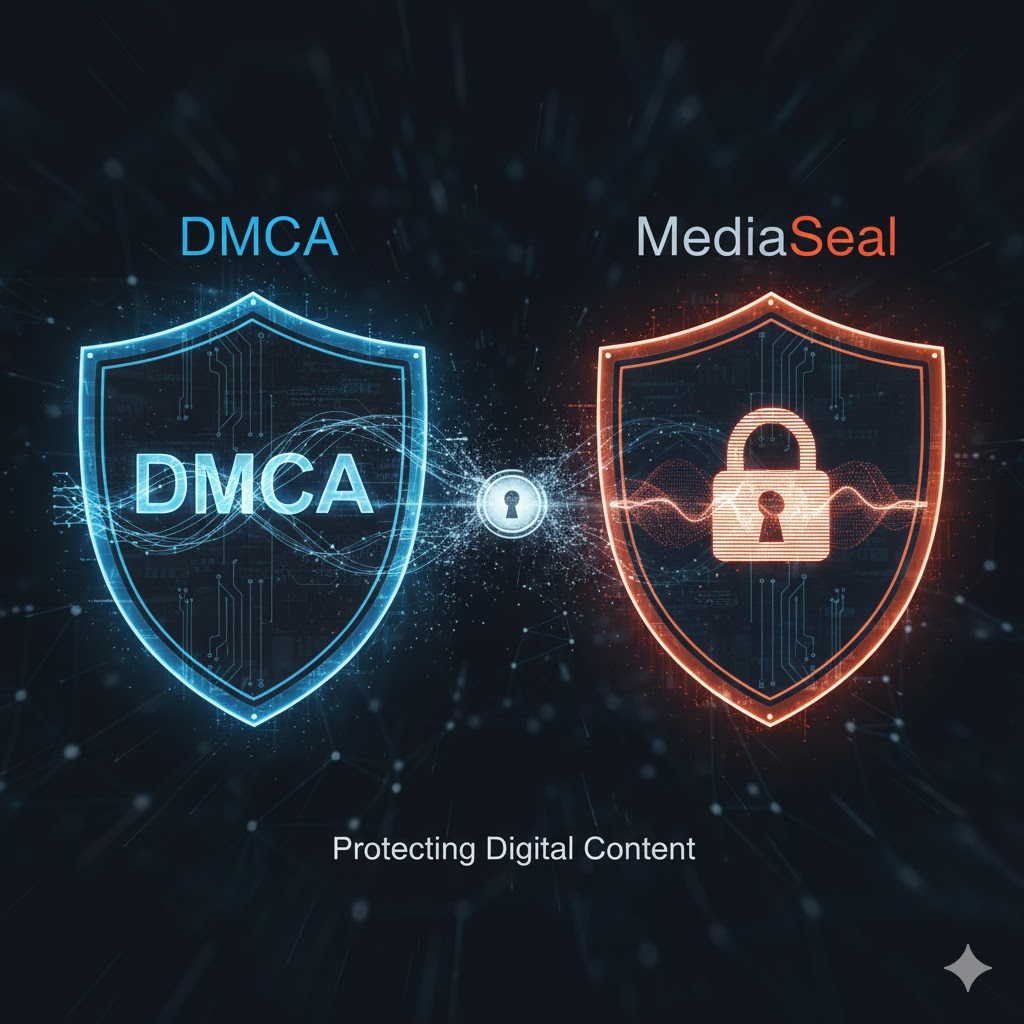
The DMCA is the Shield: It offers legal protection. MediaSeal is the Sword: It offers the proof to strike back.
Don’t rely on the law alone to protect your livelihood. Give your legal team the evidence they need to win.
 By Paul Fearon, Co-Founder