User Generated Content for Gaming Platforms
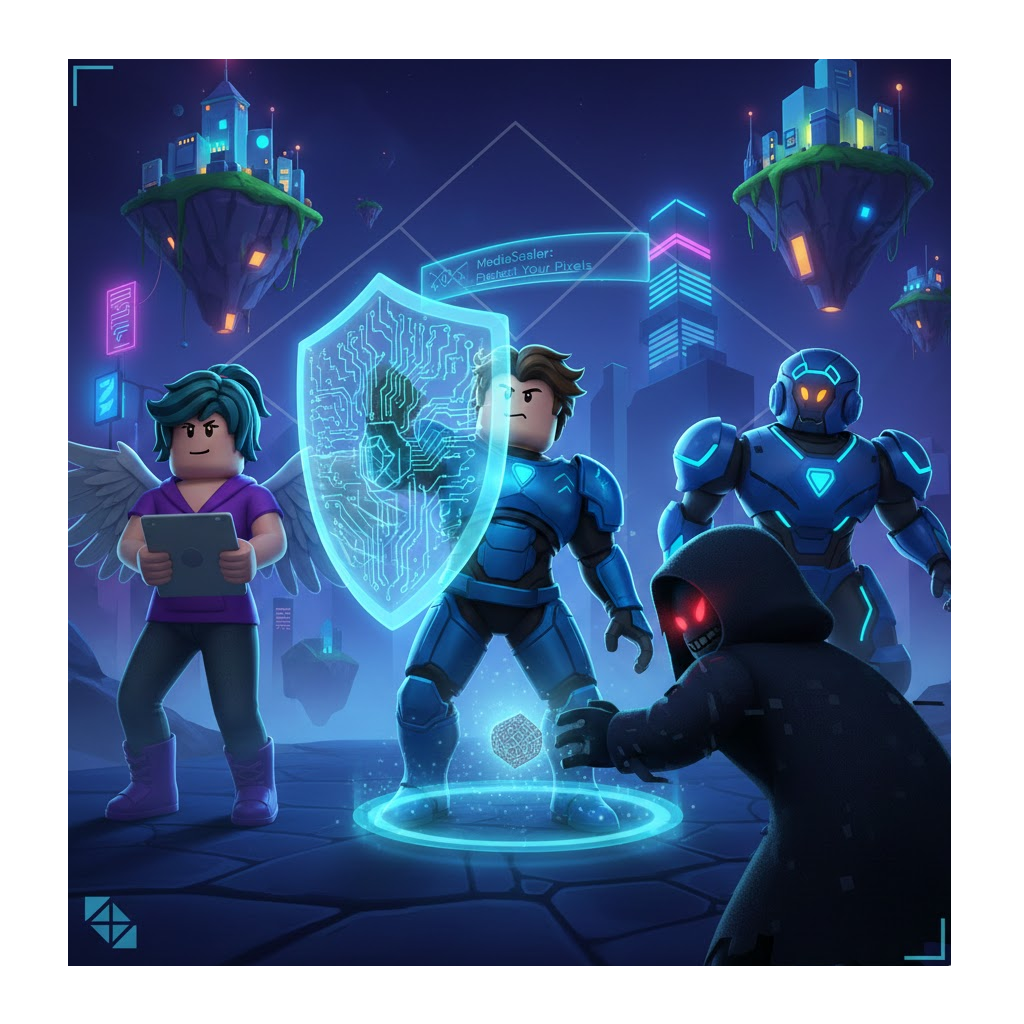
Stop the Beaming: Why Every UGC Creator Needs a Digital Seal
If you’ve spent forty hours perfecting a custom 3D mesh in Blender only to see it “beamed” (stolen) and re-uploaded by a burner account for 50 Robux less than yours, you know the frustration. In the RTC, we call it a Tuesday. But in the world of IP protection, we call it a crisis.
For Roblox UGC makers and digital artists, the “Rights Manager” often feels like a suggestion rather than a shield. You file a DMCA, the thief files a fake counter-claim with a “barcode” name, and suddenly your own hard work is being recommended under the stolen version. It’s “dog water” security for a multi-billion dollar creator economy.
The Mesh-Ripping Problem The challenge is that once a 3D asset is spawned in-game, it’s technically “public.” Bad actors use rippers to grab the buffers directly from the GPU, stripping away your metadata and leaving you with zero proof of ownership. By the time you notice the clone on the catalog, the thief has already laundered the Robux and moved to a new alt account.
How MediaSealer Changes the Game At MediaSealer, we believe “proving it’s mine” shouldn’t require a law degree or a six-month wait for a Roblox admin to reply. Our approach focuses on Cryptographic Provenance. By applying a MediaSeal to your texture files and mesh data before they ever hit the “Import” button in Studio, you create an immutable timestamp of creation.
We aren’t just talking about a visible watermark that can be painted over in Photoshop. We’re talking about a digital fingerprint embedded in the asset’s DNA. If a thief rips your work, they are ripping the “Seal” along with it—providing you with the “receipts” needed to shut down false counter-claims instantly.